
HILLIARD, Ohio — After selling his cable business a little more than a decade ago, Steve McCoy started collecting early television receivers.
Years earlier, as a teenager, McCoy worked in a television repair shop, fixing sets from the 1940s. At the time, he wasn’t aware television was even around before World War II.
 But, that soon changed.
“When I started collecting I learned that there was no place the public could see early TV technology,” McCoy said. “Collections were in people’s attics and basements.”
But, before too long, McCoy’s “collection was getting to big for my house.” So, he decided to start the Early Television Museum.
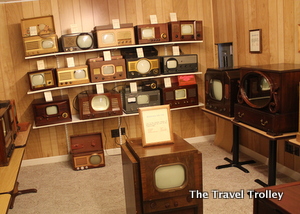
The 4,200-square-foot museum, located in a western suburb of Columbus, boasts more than 150 television sets, including mechanical sets from the 1920s and American and British equipment from the 1930s, 1940s and 1950s. Many of the sets are in working order.
“Most people are surprised to learn that there was mechanical TV in the 20s,” McCoy said. “Also, people are surprised by the huge variety of styles just after the war and how small the screens were in the early days.”
Since their inception less than 100 years ago, televisions have transmitted images of war, sporting events and even man’s first footsteps on the moon. They have changed the way people communicate and receive information, replacing newspapers, for example, as the primary method of learning about world events.
McCoy said he hopes the museum builds “an appreciation of how far back television technology goes. Most people think TV started in the late 40s.”
The museum’s most popular exhibits, McCoy said, include the collection of early color sets, a DuMont Royal Sovereign, the working Baird mechanical set and the RCA remote telecasting van.
McCoy listed the 1939 RGD British prewar set, the cabinet style and the Gray Research field sequential color monitor as his personal favorites. “I like what a beautiful color picture it produces,” McCoy said.
The Early Television Foundation, a non-profit organization that operates the museum, is always looking to expand its collection of equipment.
“We will continue to look for very rare early sets and attempt to get more of our collection working so the public can see what TV looked like years ago,” McCoy said.
There is no admission to visit the museum, but the museum suggests a donation of $5 for adults and $2 for children six years and older.
“We welcome tour groups,” McCoy said. “Kids find the museum fascinating, so consider bringing your school or Cub Scout group.”
For more information, visit www.earlytelevision.org.