
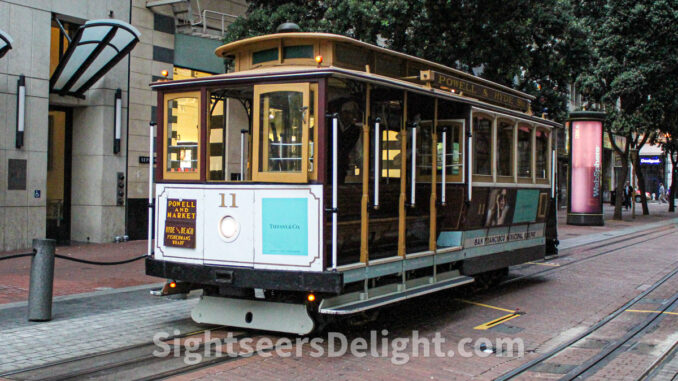
SAN FRANCISCO — There may be no greater symbol of San Francisco than the cable car.

The Fog City’s steep hills necessitated the development of a transportation that could effectively carry residents across the city’s steep terrain. So, in the 1870s, Andrew Smith Hallidie developed a transportation system that would be pulled by a cable.
The first cable cars — part of the Clay Street Hill Railroad Co. — debuted in early August 1873, and at one point, eight different lines served the residents of San Francisco. The cars remained a popular method of transportation for decades, but over the years, buses started to take on a greater share of passengers.
By the 1940s, the cable cars were on the decline, riders were choosing buses over cable cars. However, rather than seeing the cable cars relegated to the history books, the public voted for the city to take over the cable cars.
By the early 1950s, the city assumed operations of the cable cars and continues to operate them to this day. But, by the 1970s, the famed cable cars were in trouble yet again, this time needing a major overhaul.
So, from September 1982 until June 1984, the cable car system was shuttered and rebuilt as part of a $75 million restoration project. “They’re back and will be running for 100 years,” UPI quoted then Mayor Dianne Feinstein as saying in 1984.
“The magic has returned to our streets,” UPI quoted Friedel Klussmann, the resident often credited with leading the fight to save the cable cars, as saying in June 1984 as the cars were coming back on line.
Today, there are three lines: Powell-Hyde, Powell-Mason and California Street. The 47 cable cars that traverse the lines are not merely a tourist attraction; they’re a viable method of transportation.
Plan accordingly, however; lines to ride the cars can grow quite lengthy.


1 Trackback / Pingback
Comments are closed.